As we age, the skin of our face becomes loose and wrinkles appear. These changes obscure the eyes and make them appear smaller. The solution is eyelid surgery, or blepharoplasty.
If the excess skin on the upper eyelid is severe, it can also cause vision problems. The lower eyelid can develop dark circles under the eyes, which are caused by the fat bulging out. The soft tissues of the cheek sag, making the lower eyelid appear longer, giving a sad, tired and aged appearance. The solution is known as blepharoplasty, or eyelid correction.
Until recently, cosmetic eyelid surgery involved excision of skin, fat, and muscle. Today, we know that tissue removal is not appropriate for all patients. A more detailed understanding of eyelid anatomy has led to the emergence of new techniques that aim to realign and support soft tissues, preserve fat, and precisely excise skin.
Eyelid correction is an outpatient procedure and is usually performed under local, rarely general anesthesia. After the skin is cut, the orbicularis muscle is cut, under which the connective septum is located. Small incisions are made to access the two compartments containing fat. This is followed by precise excision and redistribution of the fat. The bleeding is then carefully stopped and the skin is sutured. If a drooping lacrimal gland causes swelling on the outer part of the upper eyelid, the gland can be lifted. When blepharoplasty is complete, swelling and bruising are temporarily visible. The swelling quickly decreases in the first few days after surgery with appropriate cooling, but the bruising can last up to fourteen days. The stitches are usually removed after a week. Scars in the form of a thin line are barely noticeable.
Lower blepharoplasty is more demanding than upper eyelid surgery, and recovery is also longer. There are different techniques.
Lower eyelid surgery is an outpatient procedure and is usually performed under local, rarely general anesthesia. An incision is made under the eyelashes, the skin and underlying muscle are separated, and the three fat compartments of the lower eyelid are accessed. The fat is released and carefully redistributed and reshaped to maintain a youthful appearance. Then, if the muscle is loose, it is fixed on the outside with a special suture in a position slightly higher than the inner corner of the eye. Then, the excess skin is carefully excised. When the eyelid correction is complete, swelling and bruising are temporarily visible. The swelling decreases rapidly in the first few days after surgery with appropriate cooling, and the bruising disappears within fourteen days. The sutures are usually removed after a week.
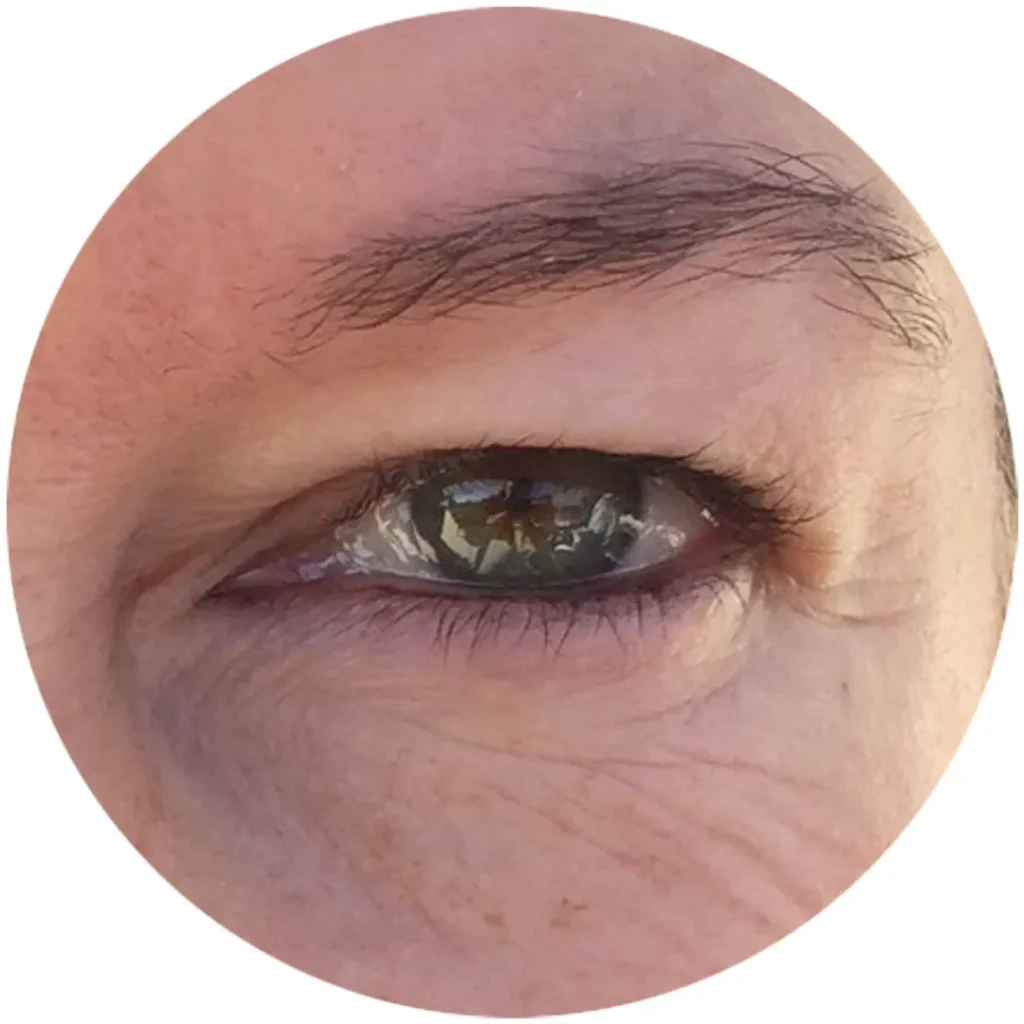
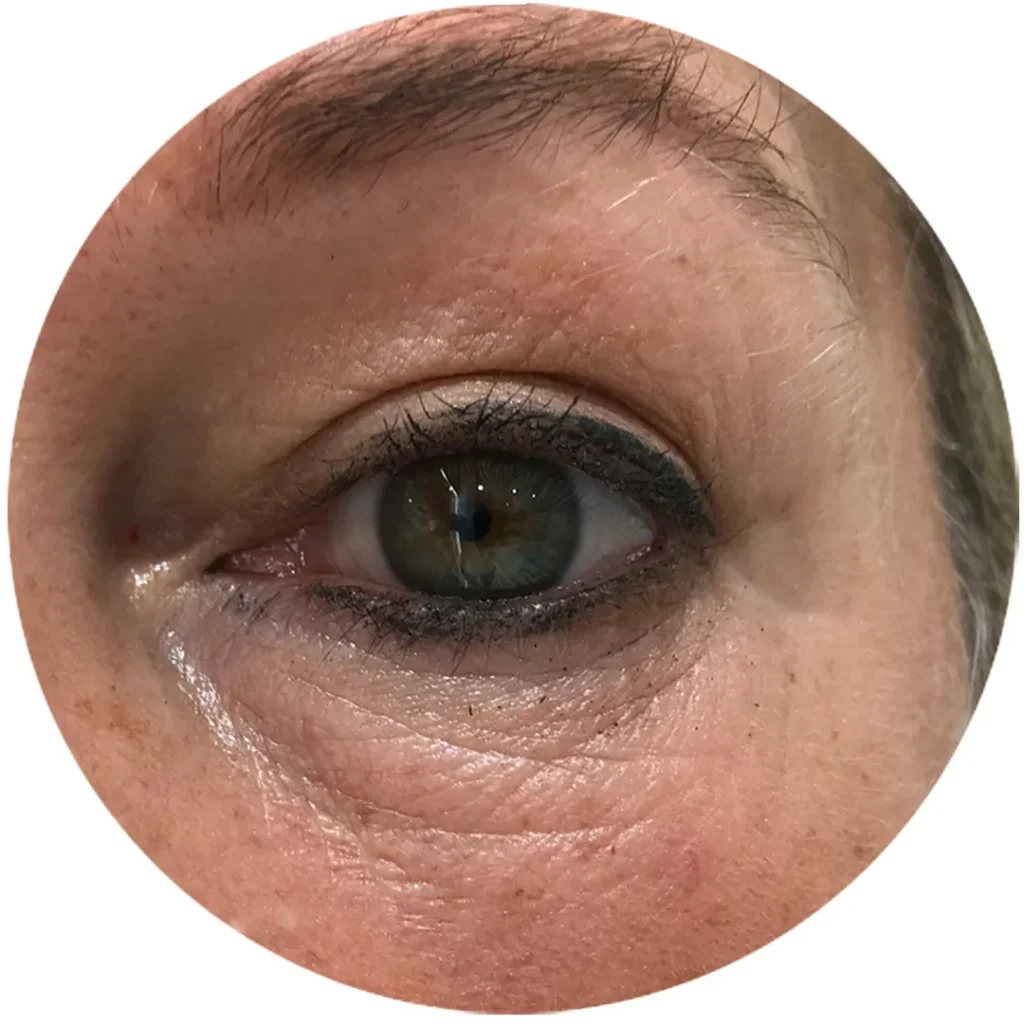
Once the eyelid correction is complete, the recovery period begins, which can be psychologically and physically demanding depending on the type of surgical treatment. When you return to your home environment, ensure that you have peace and quiet to rest. Be prepared to need some help with basic needs (feeding, care). It is expected that you will feel pain after the surgery, but the intensity and duration of the pain will vary from person to person and depend on the surgical procedure, anatomy and personality of the patient; the perception of pain is subjective and cannot be compared between patients. No severe pain is expected after blepharoplasty; this usually subsides within 2-3 days after the surgery. After the procedure, the surgical wounds will be sutured and a protective ointment and bandages will be applied.
While you have stitches: While the stitches are in the wound (5–7 days after surgery), you should not get them directly wet.
Until the wounds have healed: Avoid wearing contact lenses and applying any makeup to the operated area for 2–3 weeks after surgery.
To cover up the effects of the surgery and protect yourself from the discomfort of light, you can wear sunglasses after the surgery. Do not forget to bring them with you to your appointment at the medical center. Good wound healing also depends largely on you. You can positively influence it with rest and adapted activity, proper care, proper nutrition and abstinence from smoking for at least 4 weeks before the surgery and at least 2 weeks after the surgery.