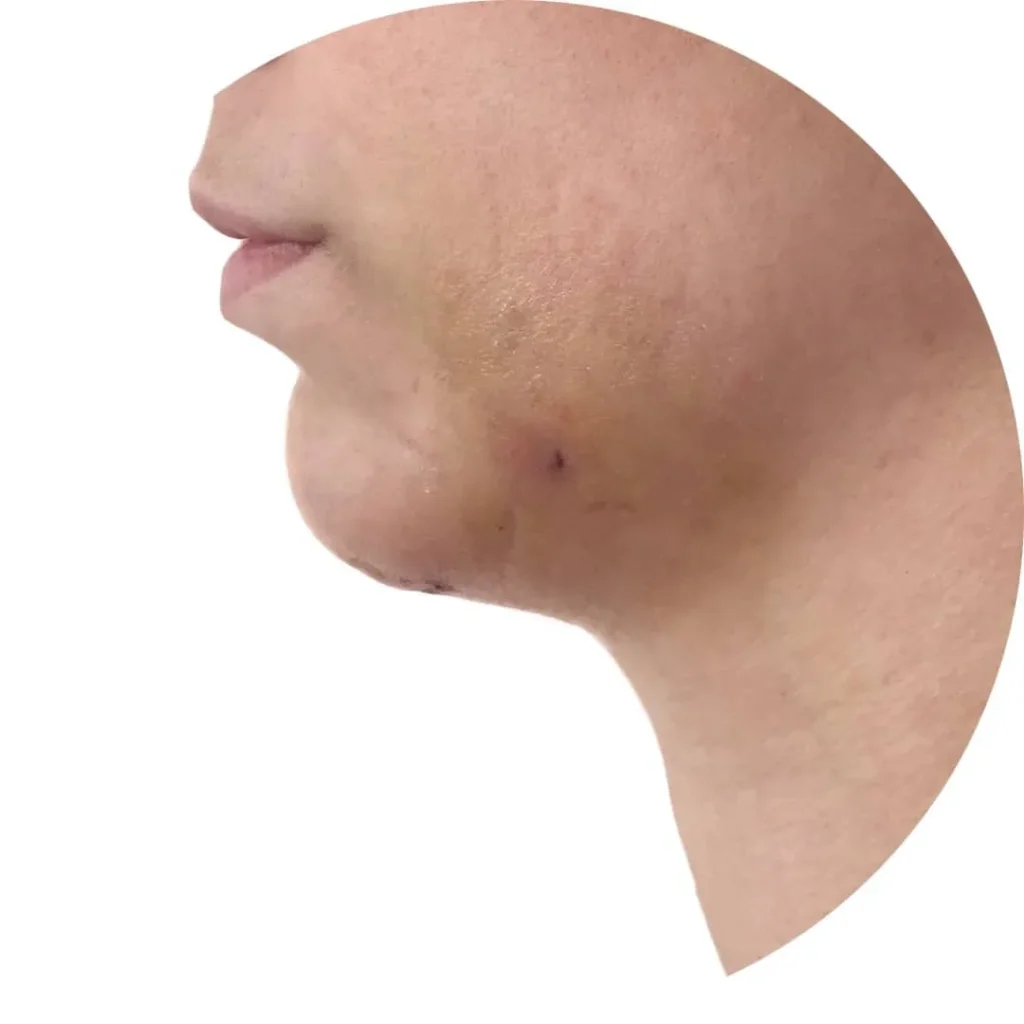
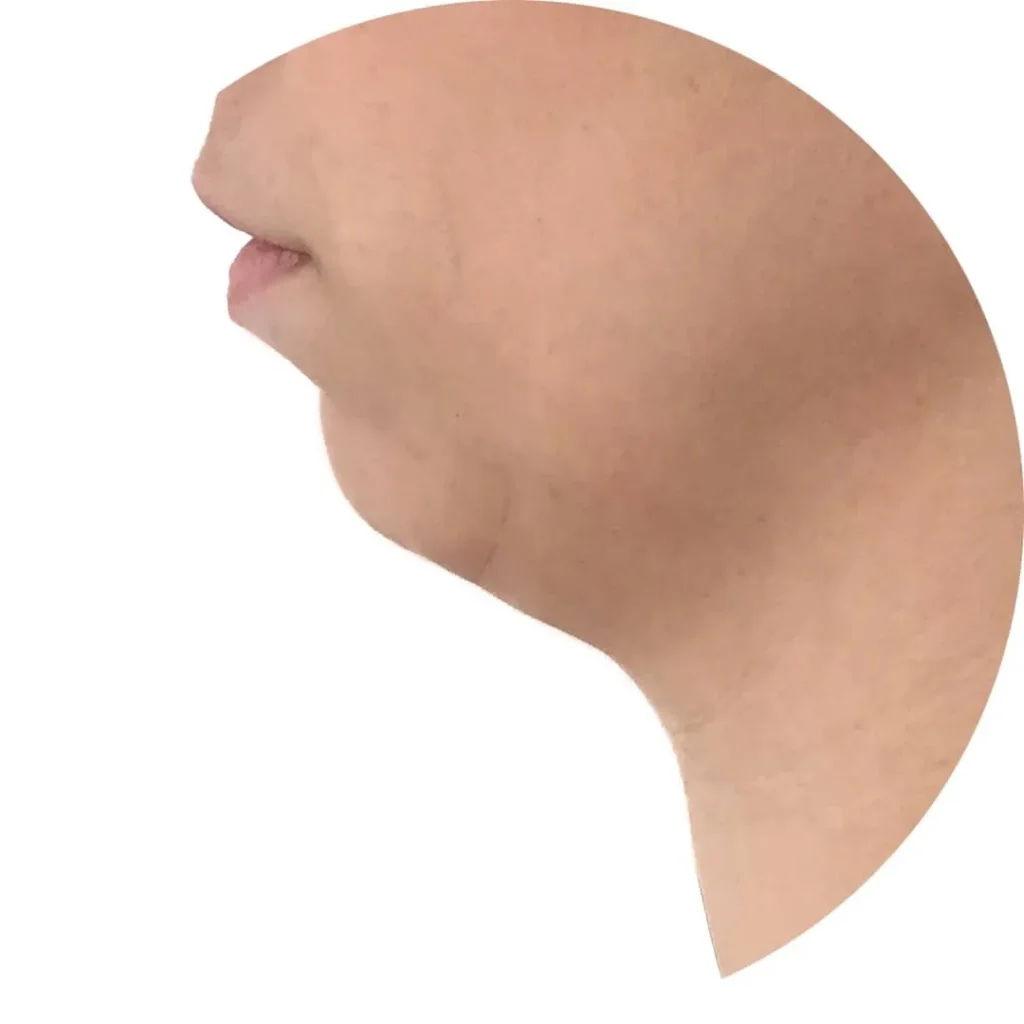
The shape of the chin has a significant impact on the appearance of the face. People often visit a specialist due to hypoplasia, a congenital disorder, or underdeveloped chin. They want their face to be harmonious, especially when viewed from the side.
DESCRIPTION OF THE PROCEDURE
All individuals require a thorough clinical examination, in certain cases additional diagnostic imaging and an examination by a maxillofacial surgeon and dentist. We then discuss in detail the advantages and disadvantages of the procedure, any complications, rehabilitation and expected results.
We can also discuss the possibility of simultaneous correction of the chin and nose, which can achieve even better harmony and a more beautiful appearance of the face.
The chin can be corrected using various surgical techniques, which can be more or less invasive.
The simplest corrections are with tissue fillers. We most often use hyaluronic acid filler of a certain viscosity, which provides a very good result, but is not permanent.
Another option is to use a silicone implant, which is placed on the lower jaw through a hidden, short incision in the skin fold under the chin.
BEFORE
AFTER
POST PROCEDURE CARE
After the procedure, depending on the technique used, you can expect mild pain, swelling, bruising, a feeling of pulling, and altered skin sensitivity in the area of the surgical incisions. These phenomena occur in all operated areas and gradually disappear in the following weeks after the surgery. After the stitches are removed, we recommend proper scar care and check-ups according to the surgeon’s instructions.
Frequently asked questions
Are there any complications?
Complications include: bleeding and fluid collection, inflammation and wound dehiscence, decreased sensitivity, scarring. Rarely, tissue reactions to the silicone implant are possible, which can result in implant displacement or a change in appearance. The result depends not only on the surgical technique and suture material, but also on the properties of the tissue and its ability to heal.
Large Network Of Experienced Medical & Dental Doctors Who
Are Experts In Their Fields.