All-on-4 / All-on-6

permanent and effective solution for replacing all teeth

All-on-4 / All-on-6 is a modern dental technique that allows for complete tooth replacement in one jaw using only four or six dental implants. This method is ideal for patients who have lost most or all of their teeth and want a permanent, stable and aesthetically pleasing solution.

In the All-on-4 / All-on-6 method, implants are placed at special angles to ensure maximum stability and strength, even in cases where there is reduced bone volume. This often eliminates the need for additional procedures, such as bone grafting. After the implants are placed, a fixed prosthetic structure is placed on them that looks and functions like natural teeth.
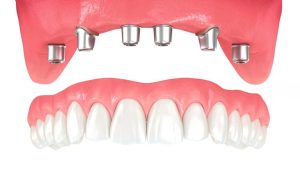
advantages of the all-on-4 / all-on-6 method:

  • Quick solution within 24 hours: in most cases, patients receive fixed teeth the same or the next day after the procedure;
  • Maximum stability:  four carefully placed implants provide exceptional stability even with reduced bone density;
  • Natural appearance and functionality: the prosthetic replacement looks like natural teeth and allows normal chewing and speech;
  • Long-lasting and reliable: with proper care, an All‑on‑4 / All‑on‑6 restoration can last a lifetime.
 

This method has revolutionized dentistry because it provides a fast, effective and aesthetically acceptable solution for patients who want to regain a strong and natural smile.

All-on-4 installation procedure

1. Consultation and planning
The first step is a detailed consultation with the dentist and an analysis of the condition of the oral cavity, which includes X-rays and CT scans. Based on the results, the dentist determines the exact position where the implants will be placed to ensure maximum stability and functionality.

The procedure is usually performed under local anesthesia, and in some cases sedation may be required. Implants are placed in the jaw using a minimally invasive technique. Four implants are placed in specific points of the jaw (two front and two back), in order to ensure maximum stability for the subsequent installation of the bridge. In some cases, the procedure may also include the extraction of the remaining teeth if they are in poor condition.

After the implants are placed, the patient is usually immediately fitted with a temporary bridge, which allows for normal chewing and functionality while the implants are stabilized. A temporary bridge can be made immediately after the operation, so the patient can get a functional solution on the same day.
After implant placement, it takes several months (usually 3-6) for the implants to fully integrate with the jawbone through the process of osseointegration (the fusion of the dental implant with the surrounding bone tissue in the jaw). During this period, the patient will wear a temporary bridge. In the meantime, the implants are being accepted and the healing process is being monitored.
Once the implants have fully integrated, the dentist takes an impression to create a permanent bridge. This bridge is precisely designed to fit perfectly into the patient’s mouth, providing an aesthetic and functional result. The permanent bridge is made of high-quality materials, such as ceramics, to make it look natural and durable.
Regular check-ups: After placing the implant and crown, the dentist performs regular check-ups to monitor the condition of the implant and the health of the gums. After permanent teeth are placed, the patient must visit the dentist regularly for check-ups of the condition of the implants and oral health. In order for the implants to last for many years, it is important to continuously maintain oral hygiene.

Large Network Of Experienced Medical & Dental Doctors
Who Are Experts In Their Fields.

Large Network of Contracted Health institutions